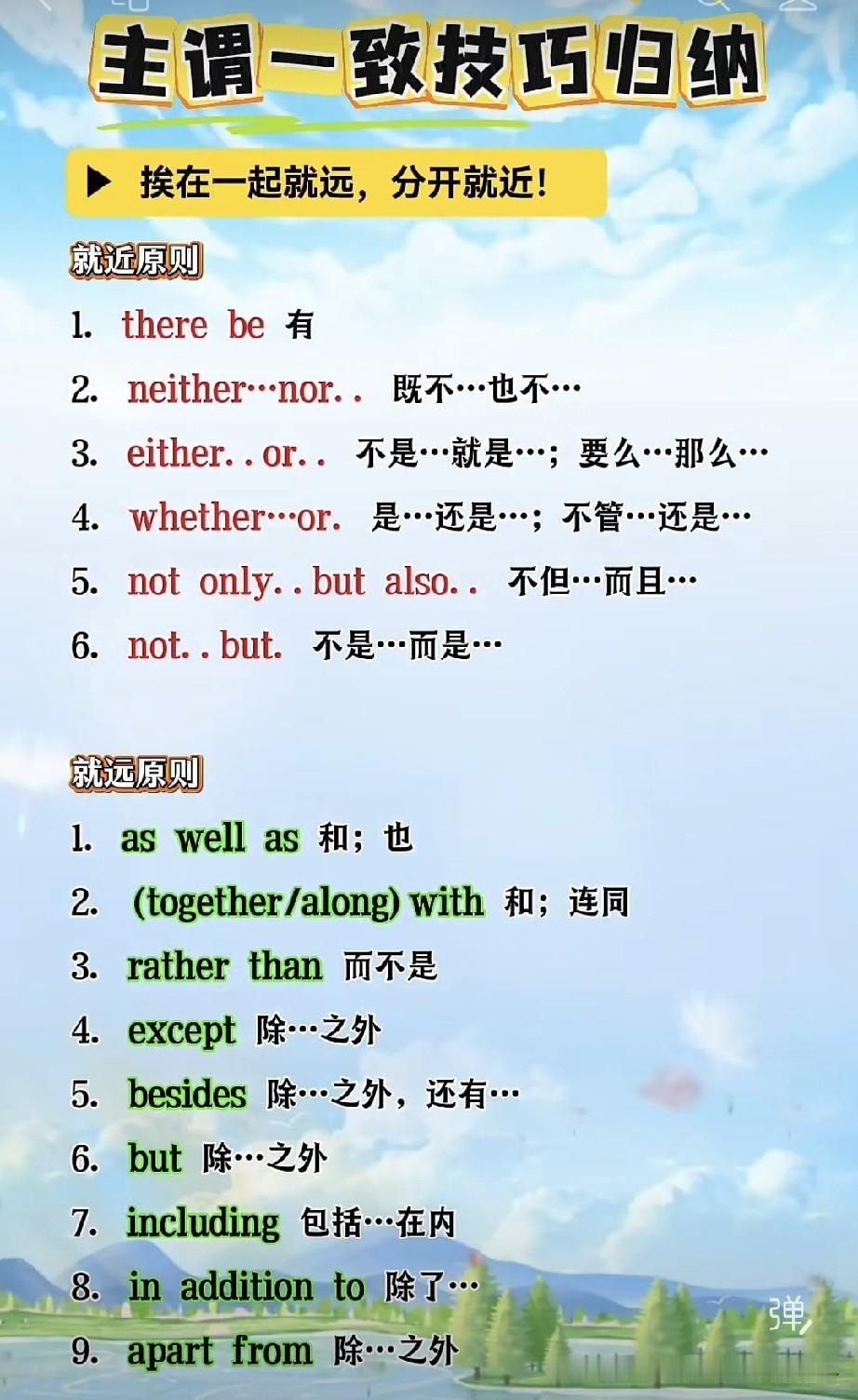
【英语中的就近原则&就远原则】
中考英语
【就近原则】谓语动词与其靠近的主语在”人称,单复数“上保持一致。
【就远原则】谓语动词与较远的主语在”人称,单复数“上保持一致。
一. 常见的就近原则:
there be有,
either...or或者……...或者,
neither...nor既不是……也不是,
not only... but also...,不仅…而且…… not...but... 不……...但是……...
例:
1. Neither Tom nor Jerry is coming.
汤姆和杰瑞都不来。
(be动词和Jerry保持一致)
2. There are some mice and a cat named Tom.
这里有一些老鼠和一只名叫汤姆的猫。
(be动词和mice保持一致)
3. Not Tom but Jerry is to blame.
不是汤姆,而是杰瑞应该受责备。
(be动词和Jerry保持一致)
4. Not only Tom but also Jerry wants to watch the cartoon.
不仅汤姆,杰瑞也想看这部动画片。
(谓语动词want和Jerry保持一致)
二. 常见的就远原则:
with和,
together with与,
along with连同,
as well as以及,
rather than而不是,
besides除了(还有),
in addition to除了、此外,
including包括
except除了(再没有),
but(除了),
like
例:
1. Nothing but two mice is in the room.除了两只老鼠,没有东西在房间里。(be动词和nothing保持一致)
2. The cats, besides Tom, like cheese.除了汤姆之外,这些猫都喜欢奶酪。(谓语动词like和The cats保持一致)
3. Tom, together with Jerry, is running.汤姆和杰瑞正在跑。
(be动词和Tom保持一致)
4. Tom, rather than Jerry, is to blame.是汤姆,而不是杰瑞,该受责备。
(be动词和Tom保持一致)
5. Tom, as well as Jerry, likes the cartoon.
汤姆,还有杰瑞,都喜欢这部动画片。
(谓语动词like和Tom保持一致)