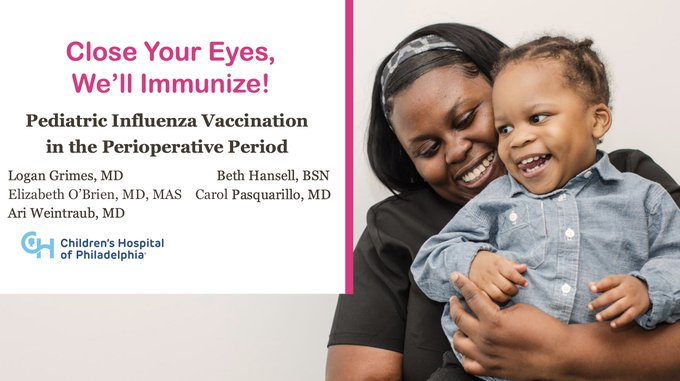
我是一名经董事会认证的麻醉师,从业已有24年。我刚刚得知,我接受培训的费城儿童医院推出了一项计划,旨在通过在儿童麻醉时为他们接种疫苗来提高儿童流感疫苗接种率。
该计划名为“闭上眼睛。我们来免疫”。
这极其不负责任。原因如下:
麻醉师极度规避风险,并努力将患者暴露于任何可能带来副作用的事物降至最低。这在儿科患者中尤为重要,因为他们往往从未接触过麻醉药物。我们根本无法预知某个孩子首次使用这些药物会有何反应。
我们在手术中使用的每一种药物都可能引发不良反应或过敏反应。一旦发生,我们的主要职责是稳定患者。我们次要的职责是识别引发反应的药物。绝对没有任何理由在手术中引入另一种药物,在这种情况下是流感疫苗,它带有伤害风险,却对手术成功毫无贡献。
流感疫苗的一些常见副作用包括发热(11-16%)和较少见的皮疹(1%)。此外,还有非零概率发生严重过敏反应和高烧,这些反应可能在几分钟内发展。
如果一个处于麻醉状态的孩子接种疫苗后出现皮疹和/或发热怎么办?这是外科医生要求的抗生素引起的吗?是麻醉剂引起的吗?是抗焦虑药引起的吗?是巴比妥类药物引起的吗?
麻醉气体也可能(罕见情况下)引发一种危及生命的反应,称为恶性高热,它通常表现为高烧。没有后续检测,我们无法知道是哪种药物负责。最常见的情况是,从未进行检测,孩子的病历将永远记录下这种可能性,即所用药物中的某些或全部导致了他们的反应。这将使未来的麻醉护理变得显著更具挑战性,并需要使用可能并非必要的替代药物。
在孩子麻醉时倡导接种流感疫苗,反映了医学界普遍但不准确的态度,即疫苗绝对安全。我简直无法相信,我在住院医师期间的导师们会支持这项举措。闭上眼睛,的确。
I'm a Board Certified anesthesiologist and have been in practice for 24 years. I just learned that the Children's Hospital of Philadelphia where I trained has launched a program to increase flu vaccine uptake among children by vaccinating them while under anesthesia.
The program is called "Close your Eyes. We'll Immunize"
This is stunningly irresponsible. Here's why:
Anesthetists are extremely risk avoidant and endeavor to minimize patient exposure to anything which carries potential side effects. This is particularly true of pediatric patients who very often have never been exposed to anesthetic medications. We simply cannot know how an individual child will respond to these drugs for the first time.
Every single medication we administer during an operation can potentially trigger untoward or allergic responses. When this occurs our primary responsibility is to stabilize the patient. Our secondary responsibility is to identify the offending agent. There is absolutely no justification of introducing another agent, in this case a flu vaccine, which carries a risk of harm and contributes nothing to the success of the operation.
Some of the more common side effects of flu vaccines are fever (11-16%) and less commonly, a rash (1%). There is also an non-zero risk of severe allergic reactions and high-grade fevers which can develop over the course of minutes.
What if a child under anesthesia receives a vaccine and develops a rash and/or fever? Is it from the antibiotic that the surgeon requested? Is it from the narcotic? The anxiolytic? The barbiturate?
Anesthetic gases can also (rarely) trigger a life threatening response called Malignant Hyperthermia which commonly presents as a high fever. Without subsequent testing we cannot know which agent was responsible. Most commonly the testing is never done and the child’s record will forever reflect the possibility that some or all of the drugs which were used are responsible for their reaction. This makes future anesthetic care significantly more challenging and will require the use of alternatives which may not be necessary.
Advocating for a flu vaccine while a child is anesthetized reflects the pervasive yet inaccurate attitude among the medical establishment that vaccines are perfectly safe. I simply cannot believe that my mentors would have ever supported this initiative when I was a resident there. Close your eyes indeed.