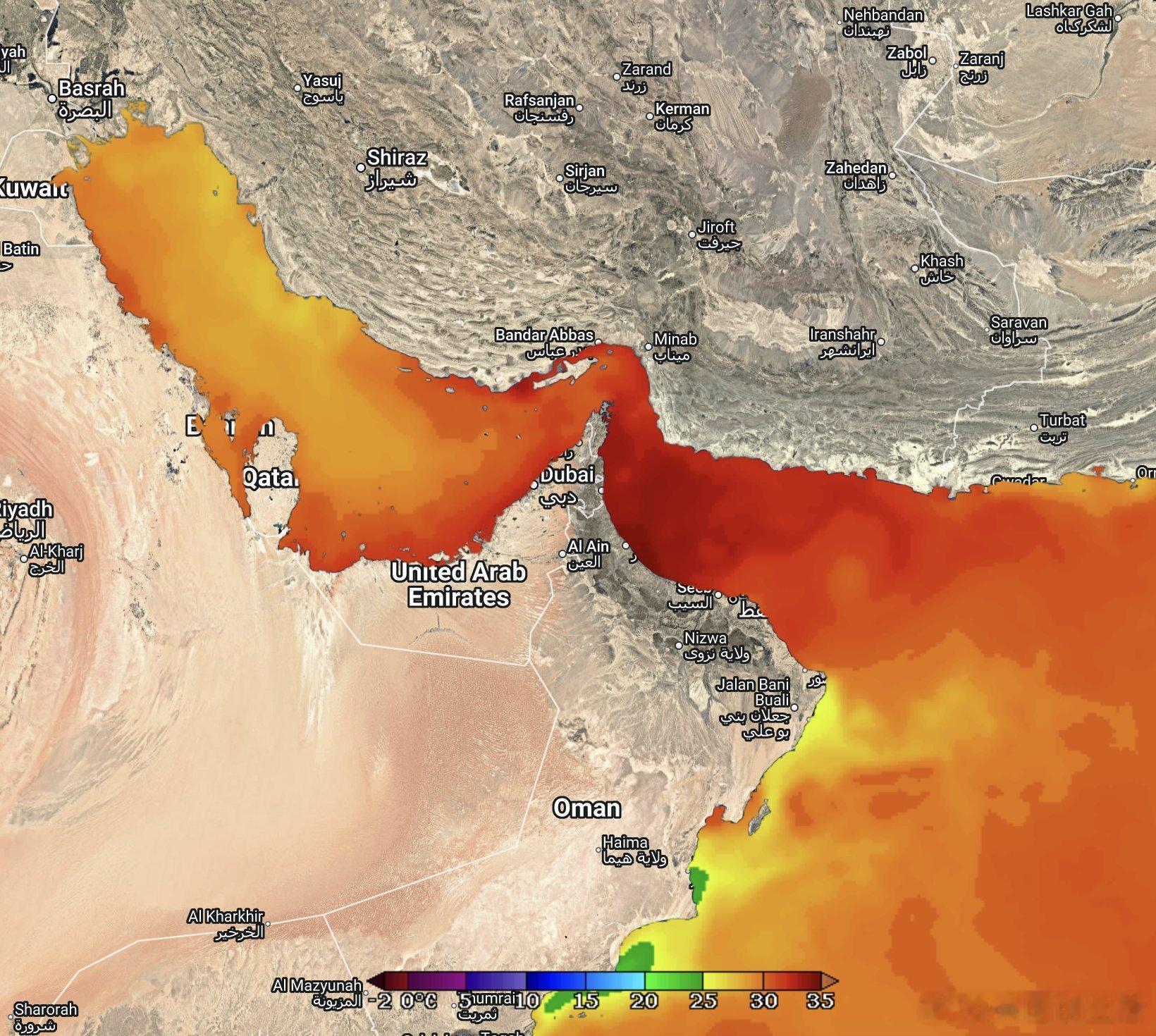
【🌊 全球最热的天然实验室:95°F(35°C) 的高温下的海水中生存之道】目前,在霍尔木兹海峡以南、阿曼北部沿海,海面温度已接近令人窒息的 95°F (35°C)。
为了便于理解,这相当于一个温暖的泡澡水温。
这种极端高温环境正是该地区出了名的潮湿闷热的根源。但从物质和生物科学的角度来看,它引出了一个更为引人入胜的问题:当水温与人体体温相当时,水生生态系统是如何生存的?
波斯湾目前正成为人类研究未来海洋变暖问题的终极天然实验室。生活在这些水域的海洋生物为了适应环境,改写了进化生物学的规则,但这也付出了沉重的代价:
📉 “缩小”法则
研究当地物种(例如埃伦伯格鲷)的海洋生物学家发现了一个有趣的异常现象:生活在高温区的鱼类比生活在附近较冷开阔海域的同种鱼类小14%到40%。
🫁 代谢氧气陷阱
为什么会缩小体型?这归根结底是基本的物理学和呼吸力学原理。较温暖的水中溶解氧含量极低。由于鱼鳃表面积无法快速增长以满足大型鱼在高温水中极高的代谢需求,体型较大的鱼会面临代谢窒息的风险。进化残酷的解决办法是什么?保持较小的体型。
💡 宏观启示
墨西哥湾的基础设施和生物群落已经处于陆地极限的边缘。它们让我们得以窥见随着全球海温升高,其他全球海事基础设施将面临的结构性、环境性和供应链性挑战。
大自然总能找到适应之道——但适应几乎总是需要在规模、效率和体量方面做出根本性的妥协。
随着商业运营和生态监测在全球范围内不断扩大,霍尔木兹海峡传出的数据不再仅仅反映局部天气异常;它更是未来资源管理结构性蓝图的雏形。🌊 The World's Hottest Natural Lab: Survival at 95°FRight now, just south of the Strait of Hormuz off the coast of northern Oman, the ocean is registering sea surface temperatures approaching a blistering 95°F (35°C).
To put that in perspective, that is the temperature of a warm therapeutic bath.
This extreme thermal environment is the engine behind the region’s legendary, insufferable humidity. But from a material and biological science standpoint, it triggers a much more fascinating question: How does an aquatic ecosystem survive when its water matches human body temperature?
The Persian Gulf is currently serving as humanity’s ultimate natural laboratory for the future of ocean warming. The marine life operating in these waters has rewritten the rules of evolutionary biology to adapt, but it comes with a steep price:
📉 The "Shrinkage" MandateMarine biologists studying local species, like the Ehrenberg’s snapper, discovered a fascinating anomaly: fish inside this hyper-thermal zone are 14% to 40% smaller than the exact same species living in cooler, open ocean waters nearby.
🫁 The Metabolic Oxygen TrapWhy the downsize? It comes down to basic physics and respiratory mechanics. Warmer water holds drastically less dissolved oxygen. Because a fish's gill surface area cannot scale fast enough to meet the hyper-accelerated metabolic demands of a large body in hot water, larger fish face metabolic suffocation. Evolution’s brutal fix? Keep the workforce small.
💡 The Macro TakeawayThe infrastructure and biological life in the Gulf are already operating at the absolute outer edge of terrestrial limits. They provide a sneak peek into the structural, environmental, and supply-chain challenges the rest of the global maritime infrastructure will face as global sea temperatures climb.
Nature finds a way to adapt—but adaptation almost always requires a fundamental compromise in scale, efficiency, and size.
As commercial operations and ecological monitoring scale up globally, the data coming out of the Strait of Hormuz isn't just a localized weather anomaly; it's a structural blueprint for the future of resource management.