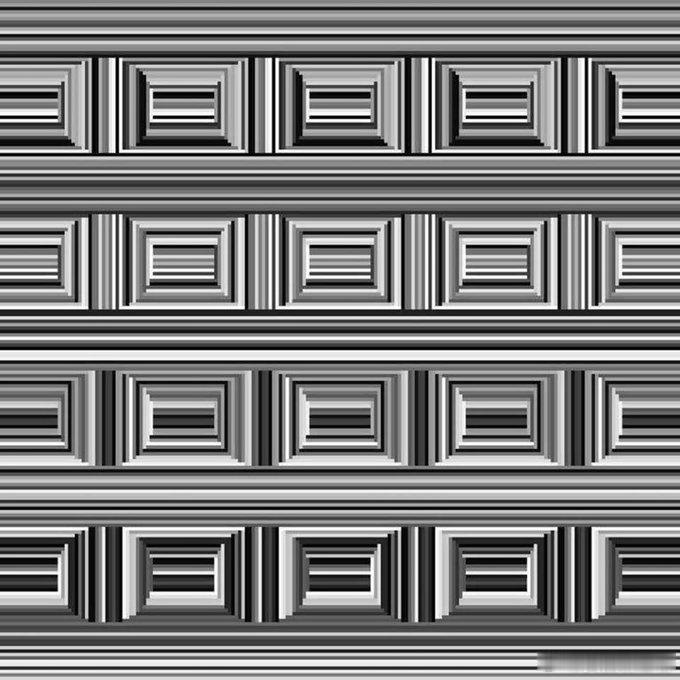
【一旦你看到它,就无法忘记:拱形凹槽错觉】这张图片中有 16 个圆。你能找到它们吗?
拱形凹槽错觉是安东尼·诺西亚 (Anthony Norcia) 于 2006 年创作的经典视觉错觉。当你第一眼看到它时,你的大脑会立即将图像归类为一系列凹陷的矩形门板或天花板瓷砖(建筑学上称为“拱形凹槽”)。
然而,就在图像内部,隐藏着 16 个完美的圆。
如何看到这些圆
如果你难以找到它们,说明你的大脑优先关注的是直线。
尝试以下方法来破解这个错觉:
1) 关注垂直条纹:仔细观察凹陷方块之间的垂直条纹或“柱子”。
2) 放松你的视线:放松你的目光,将图像视为一个整体,而不是追踪单个线条。
3) 观察交点:圆圈恰好嵌入在正方形的角点交汇处。一旦你注意到一个圆圈,其余16个圆圈就会突然出现在整个网格中。
为什么你的大脑会被欺骗
这种错觉直接利用了人类视觉系统处理世界的方式,主要依赖于两种心理和神经机制:
1) 像素到图案(分组):人脑是一台庞大的模式识别机器。它倾向于根据清晰、鲜明的对比线条将特征分组。强烈的水平和垂直条纹向你的视觉皮层传递了“直角”和“矩形”的信号,完全掩盖了圆圈的弧形边界。
2) 自上而下的处理:你的大脑会利用过去的经验来解读你所看到的东西。在日常生活中,带有阴影的结构化网格几乎总是矩形物体(例如门、窗或瓷砖)。由于圆形在这种特定的视觉环境中极为罕见,你的大脑会假定存在矩形,并替你“填充”出这个现实,直到你强迫自己仔细观察。
一旦你训练大脑识别圆形,你通常就可以随意地在正方形和圆形之间切换感知。Once you see it, you can't unsee it: Coffer illusion
In this image there are 16 circles. Can you find them?
The Coffer Illusion is aic optical illusion created by Anthony Norcia in 2006. When you first look at it, your brain immediately categorizes the image as a series of sunken, rectangular door panels or ceiling tiles (known architecturally as "coffers").
However, hidden in plain sight directly inside the image are 16 perfect circles.
How to See the Circles
If you are struggling to see them, your brain is stuck prioritizing the straight lines.
Try this to unlock the illusion:1) Focus on the vertical strips: Look closely at the vertical bars or "pillars" running between the recessed squares.
2) Unfocus your eyes: Relax your gaze and look at the image as a whole rather than tracking individual lines.
3) Look at the intersections: The circles are embedded precisely where the corners of the squares meet. Once you manage to see a single circle, the rest of the 16 will suddenly pop into view across the entire grid.
Why Your Brain Gets Tricked
This illusion plays directly on how the human visual system processes the world, relying on two main psychological and neurological mechanisms:1) Pixel to Pattern (Grouping): The human brain is a massive pattern-recognition machine. It leans heavily toward grouping features together based on sharp, distinct contrasting lines. The strong horizontal and vertical stripes strongly signal "right angles" and "rectangles" to your visual cortex, completely masking the curved boundaries of the circles.
2) Top-Down Processing: Your brain uses past experience to interpret what you are seeing. In daily life, structured grids with shadows are almost always rectangular objects (like doors, windows, or tiles). Because circles are highly unusual in this specific visual context, your brain assumes rectangles are present and "fills in" that reality for you until you force it to look closer.
Once you train your brain to see the circles, you can usually toggle your perception back and forth between the squares and the circles at will.